1 The Retention Math Every Spa Owner Needs to Know
Before diving into tactics, let's talk numbers. Research consistently shows that acquiring a new client costs five times more than retaining an existing one. When you factor in advertising, time spent on inquiries, and the discount-driven first appointment that many spas use to attract newcomers, that gap can be even wider.
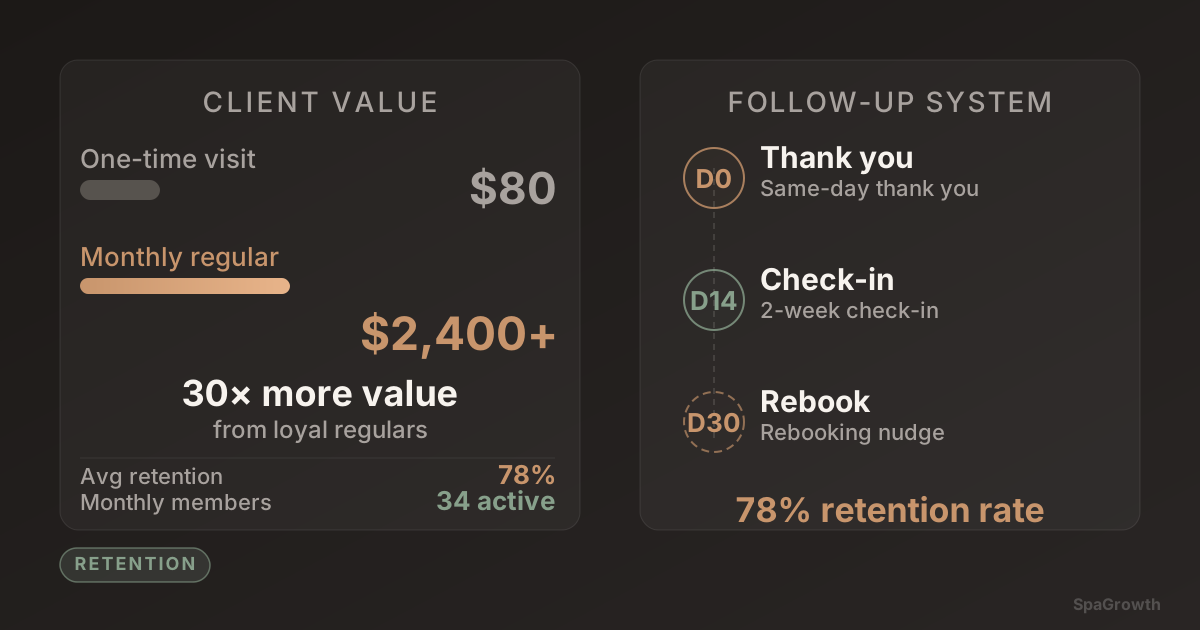
But here's the more striking number: a client who visits your spa just once is worth roughly $80 to $120 in lifetime revenue. A client who books monthly for two years? That's $2,400 or more — from the same person, with zero additional acquisition cost.
That 30x difference is not theoretical. It's the gap between a spa that struggles to fill its calendar and one that runs at 80%+ capacity almost effortlessly. Retention is the most underrated lever in the entire spa business.
The math in plain terms: If you have 50 active monthly clients, each worth $100/month, that's $5,000/month in predictable revenue — before you add a single new booking. Retention builds the floor. New clients build on top.
The good news: most of what drives retention isn't complicated. It's a handful of systems applied consistently. Let's go through each one.
2 The First Visit Is Where Retention Is Won or Lost
By the time a new client leaves your spa after their first session, the decision of whether they'll come back has largely already been made. The first visit does more retention work than any follow-up message, discount offer, or loyalty program you'll ever run.
Start with a thorough intake form
A good intake form isn't just liability protection — it's your first chance to show a client that their experience will be personalised. Ask about pressure preference, chronic areas, health conditions, and what they're hoping to get from the session. Ask if it's their first professional massage. Ask how they found you.
The key is actually using this information. Before the session starts, your therapist should have reviewed the form and opened with something like: "I see you mentioned tension in your upper back from desk work — I'll spend extra time there today."
Deliver a personalised session, then rebook before they leave
The most powerful rebooking moment in the entire client relationship is the 90 seconds right after a session ends. The client is relaxed, they feel good, and the value of what just happened is at its peak in their mind. This is when you ask:
"How are you feeling? Shall we get your next one on the calendar now? Most clients find that coming back in three to four weeks keeps the results going — I have Thursday the 10th or Tuesday the 14th available."
Give them two specific options. Don't ask "would you like to rebook?" — that's a yes/no question that makes it easy to defer. Offer a choice between two dates and let them pick. This simple shift converts significantly more first-time clients into second visits.
3 Build a Rebooking System — Not a Rebooking Habit
Relying on a therapist's memory to ask about rebooking is fragile. A system that runs the same way every time is not. Here's what a reliable rebooking system looks like:
- Step 1 — Ask at checkout: Every client, every time. "Would you like to book your next visit while you're here?" Make this a non-negotiable part of the checkout script.
- Step 2 — Offer an on-the-spot incentive: "If you book today, I can give you 10% off your next session." This creates a small urgency without devaluing your service — it's a reward for committing, not a discount for being a new client.
- Step 3 — Send a booking reminder: 48 hours before their next appointment, send a text reminder. Not just a confirmation — something warm and personal.
"Hi [Name], just a reminder you're booked in with us on Thursday at 2pm. Looking forward to seeing you — reply CANCEL if anything comes up."
That last line matters. Giving clients an easy way to cancel reduces no-shows, because people who can cancel easily will cancel instead of ghosting. And a rescheduled appointment is worth far more than a no-show.
Booking software tip: Most modern booking tools (Jane App, Mindbody, Vagaro) can automate reminder texts. If you're not using automated reminders yet, that's one of the highest-ROI changes you can make this week.
4 Introduce a Membership Program
Memberships are the single most powerful retention tool available to independent spa owners. The psychology behind them is fascinating — and entirely in your favour.
When a client pays a monthly membership fee, several things happen automatically. First, the sunk cost effect: they've already paid, so they feel motivated to use it. Second, the session becomes part of their routine rather than a discretionary treat — it's no longer "should I treat myself this month?" but "when am I booking my monthly massage?" Third, members feel a sense of belonging to something, which builds loyalty beyond the transaction.
How to structure a membership
A simple, effective membership structure looks like this:
- $79–$99/month — one 60-minute session, rollover unused sessions (up to one), pause option (up to two months/year)
- $109–$129/month — one 90-minute session, same rollover and pause terms
- Members get priority booking and a small discount (10–15%) on additional sessions or retail products
The rollover option reduces the anxiety of "I'll lose my session if I don't come this month" — which paradoxically makes people more likely to sign up and less likely to cancel. The pause option handles the common objection of "what if I travel or get busy" before it's even raised.
Position the membership not as a discount program but as a wellness commitment. "Our members tend to see the best results because regular sessions build on each other" is both true and compelling.
5 The Three-Touch Follow-Up Sequence
Most spas do nothing after a client leaves. A few send a generic "thanks for visiting" email. The ones with the highest retention rates run a structured follow-up sequence for every new client — and it doesn't require a marketing team to do it.
Here's the sequence that works:
- Same day — Thank you text: Send within two hours of the appointment ending. Keep it short and personal.
- Day 14 — Check-in text: Two weeks later, a simple welfare check. This is what separates memorable therapists from forgettable ones.
- Day 30 — Rebooking nudge: If they haven't rebooked, a gentle prompt with a direct link to your booking page.
Day 0: "So glad you came in today, [Name]! I hope that tension in your neck is already feeling better. See you next time!"
Day 14: "Hey [Name], just checking in — how's that shoulder feeling two weeks on? If the tension has crept back in, I have a few spots open next week."
Day 30: "Hi [Name]! It's been about a month since your last session. Regular treatments tend to build on each other — ready to book your next one? [booking link]"
Three texts over 30 days. That's it. Most booking software can automate this entirely. If you're not using automation, a simple spreadsheet with a "last visit" column and a daily five-minute check can accomplish the same thing.
6 Remember What Clients Tell You
This is the section that separates good spas from ones clients rave about to their friends. Client loyalty is almost entirely built on feeling seen and remembered.
After every session, take 60 seconds to add notes to the client's file. Not just clinical notes about their presenting tension patterns — notes about what they mentioned in conversation:
- "Mentioned she's going to Paris in two weeks for her anniversary"
- "Stressed about a big project deadline at work, due end of month"
- "Said her lower back has been worse since she started running again"
- "Her son just started university — empty nest, processing it emotionally"
At the next visit, open with: "How was Paris?" or "Did that project deadline go okay?" The client's reaction — genuine surprise and warmth that you remembered — is worth more than any loyalty discount you could offer.
This is the practical foundation of every referral you'll ever get from a loyal client. People don't refer their friends to "a good massage place." They say "you have to go to Sarah — she remembers everything and makes you feel like the only client she has."
Intake form upgrade: Add a field that simply says "Anything going on in your life we should know about (upcoming travel, stressful events, celebrations)?" Most clients will love filling it in — it signals from the start that you run a thoughtful practice, not a conveyor belt.
7 Birthday and Anniversary Surprises
A birthday text with a small discount feels deeply personal even when it's automated — because most businesses don't bother. The bar is genuinely low here, which means clearing it earns outsized goodwill.
Collect birthdays on your intake form. Set up an automated text (or calendar reminder if you're doing this manually) to send three to five days before their birthday:
"Happy almost-birthday, [Name]! We'd love to celebrate with you — use BIRTHDAY20 for 20% off any session booked this month. You deserve a treat."
If your booking software tracks client anniversaries (i.e., the date of their first-ever visit), a "one year with us" message works equally well:
"[Name], it's been one whole year since your first visit! Thank you for trusting us with your wellness. Here's a little gift — 15% off your next session: LOYAL15."
These moments cost you a small discount on one session. They generate word-of-mouth, social media posts, and the kind of emotional loyalty that no amount of Google Ads can replicate. If you're also working on improving how clients find you online in the first place, see our guide on setting the right pricing to attract and retain the right clients.
8 Handling Cancellations and No-Shows
A firm cancellation policy doesn't push clients away — a badly communicated one does. Here's the distinction: clients accept that missed appointments have consequences. What they don't accept is feeling blindsided, punished, or embarrassed.
A fair policy looks like this: 24-hour cancellation notice required. Cancellations under 24 hours incur a 50% charge. No-shows are charged in full. Members get one grace cancellation per quarter.
Communicate it clearly at booking, in your confirmation email, and again in your 48-hour reminder. When you do need to charge a cancellation fee, use language like:
"Hi [Name], I've applied our short-notice cancellation fee of $X to your card on file — you'll see it in the next day or two. I know things come up, so no stress at all. Hope to see you soon — I'll keep an eye out for a spot that works for you."
Warmth and firmness aren't opposites. The fee protects your income. The tone protects the relationship. Both matter.
The ideal client journey — from first visit to loyal regular:
Visit 1: Personalised intake → tailored session → rebook before leaving → same-day thank you text.
Week 2: Check-in text ("how are you feeling?") → they reply → brief warm exchange.
Visit 2: Therapist references something from their intake or first visit → client is delighted.
Month 2: Membership offer introduced ("a lot of clients in your situation find monthly sessions really help — we have a membership that makes it easy").
Month 3 onwards: Regular monthly sessions, birthday message, occasional loyalty reward, referrals begin arriving.
Want a website that converts visitors into bookings?
We build done-for-you websites for massage spas that rank on Google, load fast, and make it easy for clients to book online. Starting from $149/mo.
Book a Free Strategy Call →Retention Is Good Service Plus a System
If there's one thing to take from this guide, it's that retention isn't magic and it isn't complicated. It's the combination of two things: genuinely caring about your clients and having a repeatable system that expresses that care consistently.
The follow-up sequence works because you actually care how their shoulder is feeling. The birthday discount works because you noticed it was coming up. The membership works because you genuinely believe regular sessions produce better results — because they do.
The system is just the delivery mechanism for care you already have. Without the system, the care stays invisible — felt in the moment, then forgotten. With the system, it compounds over months and years into the kind of client relationships that fill your calendar without a marketing budget.
Start with one change this week. Pick the one that feels most absent from your current practice — whether that's the post-session rebooking ask, the 14-day check-in text, or the intake notes habit. Run it consistently for 30 days and watch what changes.
The spas that retain the best clients aren't doing ten things differently. They're doing three things consistently. Pick yours and start today.