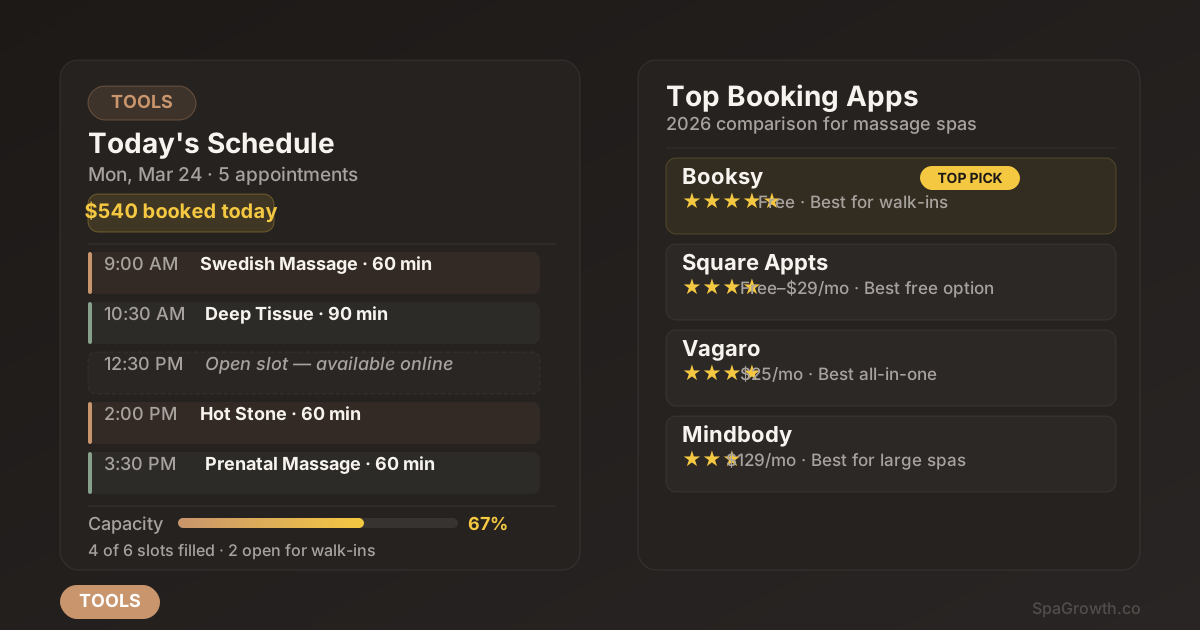
What Good Booking Software Actually Does for You
Before comparing tools, let's be clear on what you're actually buying. A good booking system for a massage spa should:
- Accept online bookings 24/7 without requiring you to answer texts or calls
- Send automatic confirmation and reminder messages to reduce no-shows
- Collect deposits or prepayments to protect against last-minute cancellations
- Store client notes, session history, and preferences
- Handle multiple therapists and rooms without double-booking
- Process payments cleanly at checkout
Most of the major platforms do all of this adequately. The differences are in pricing structure, ease of use, the marketplace exposure they offer, and — crucially — where your booking page actually lives. More on that last point shortly.
The Top 4 Booking Apps for Massage Spas
Booksy
Free + 2.49% transactionsBooksy is arguably the most popular booking app in the wellness space in the US, and it has a genuine marketplace advantage: clients who have never heard of your spa can discover you through the Booksy app itself. For brand-new spas trying to get their first clients, this is a real benefit.
Pros:
- Large built-in user base that can discover your spa
- Clean, easy-to-use booking flow for clients
- Free base plan (you pay per transaction)
- Good mobile app for managing your calendar on the go
Cons:
- Your Booksy profile page sits on Booksy's domain, not yours — it doesn't help your own Google rankings
- Client relationship is partly owned by Booksy, not you
- Limited customization — your page looks like every other Booksy page
Square Appointments
Free – $29/moSquare Appointments is the best free option for a solo massage therapist or a small spa that's just getting started. It integrates seamlessly with Square's payment processing, and the free plan is genuinely usable — not a crippled teaser.
Pros:
- Free plan covers most solo therapist needs
- Excellent payment integration with Square POS
- Clean booking widget that embeds into any website
- Good client management and history
Cons:
- No marketplace — clients must find you through other channels first
- Multi-location and advanced reporting require paid plans
- Less wellness-specific than competitors (no SOAP notes, etc.)
Vagaro
$25–$85/moVagaro is the most complete all-in-one platform for a growing massage spa. It includes booking, POS, email and SMS marketing, memberships, gift cards, and a client app — all under one roof. If you're managing 3+ therapists and want to minimize the number of tools you're juggling, Vagaro is the strongest option.
Pros:
- Comprehensive — covers nearly every operational need
- Strong membership and package management
- Built-in email and SMS marketing tools
- Vagaro marketplace adds some discovery traffic
Cons:
- More expensive than alternatives, especially as you add staff
- Can feel overwhelming for a solo therapist or small spa
- Interface is functional but not particularly elegant
Mindbody
$129–$349/moMindbody is the enterprise option — powerful, with a large consumer marketplace app, but priced accordingly. Unless you're running a high-volume spa or multiple locations, the cost is hard to justify when alternatives do 90% of the same things for a fraction of the price.
Pros:
- Largest consumer-facing wellness marketplace in the US
- Robust reporting and multi-location management
- Integrates with many third-party tools
Cons:
- Expensive — $129/mo just to start, $349/mo for full features
- Steep learning curve; complex for small operations
- Aggressive upsells and long-term contract pressure
The Mistake Everyone Makes: Booking on the Platform Instead of Your Website
Here's the part most "best booking software" articles skip — and it's the most important strategic decision you'll make about your booking setup.
Almost every spa owner sets up their booking system and then sends clients directly to their Booksy profile, their Vagaro page, or their Google Maps "Book" button. It feels like the path of least resistance. But it has three serious problems:
Problem 1: You're renting visibility on someone else's platform
When a client books through your Booksy profile, they're on Booksy's website. Your page is booksy.com/spa/your-spa-name. That URL belongs to Booksy. Every visit to that page builds Booksy's domain authority, not yours. It does nothing for your Google rankings.
Meanwhile, right there on that same Booksy page, in the sidebar, are direct links to your competitors' profiles. You're essentially advertising for them while they do nothing for you.
Problem 2: You can't run Google Ads to a platform profile
Google Ads is one of the highest-converting channels for local service businesses. A spa spending $500/month on targeted Google Ads — sending traffic to a fast, well-optimized website with a clear booking button — can reliably generate 15–30 new client inquiries per month. But you can only run effective Google Ads to a page you control. You can't send paid traffic to a Booksy profile. You'd be paying Google to send clients to Booksy, who would show them your competitors.
Problem 3: You don't own the relationship
When a client books through a third-party platform, their primary relationship is with that platform — not with you. They're a Booksy user who happens to visit your spa. When you have their booking data on your own website, they're your client first, and you control how you communicate with them, retain them, and bring them back.
The right setup: Use whatever booking software fits your operation, but embed the booking widget directly on your own website. Every booking platform worth using (Square, Vagaro, Acuity, Jane App, and others) offers an embeddable widget. Your clients book seamlessly on your site — you get the Google ranking credit, you own the experience, and you can run ads to your own pages.
Your Website + Booking Software = The Winning Combination
The spas that grow fastest and most sustainably aren't just the ones with the best booking software. They're the ones who have a professional website that ranks on Google, with booking integrated directly into that site.
Here's what that combination unlocks:
- Google Maps rankings: Google's local algorithm favors businesses with a real website over those that only have platform profiles. A properly optimized website is one of the strongest signals you can send.
- Google Ads: You can run targeted ads to specific service pages ("Swedish massage [your city]") and send that traffic directly to a booking page — converting paid clicks at 8–15% rates with the right setup.
- Organic SEO: Over time, a website with good content ranks for searches like "best massage spa in [city]" — free, permanent traffic that platform profiles can never generate.
- Brand trust: A professional website is still the single strongest trust signal for a new client who's never heard of you. When someone finds your Google Maps listing and taps your website link, a polished site converts them. A Booksy profile makes them feel like one of many.
- Email and retargeting: When someone visits your website, you can retarget them with ads, collect their email, and bring them back. None of this is possible if your "website" is a platform profile page.
"Booking software fills your calendar. Your website is what gets people to your calendar in the first place."
Our Recommendation by Spa Type
Solo therapist, just starting out: Square Appointments (free) embedded on a simple professional website. Keep your overhead to almost zero while presenting professionally.
Small spa, 1–4 therapists: Booksy or Vagaro embedded on your own website. Use Booksy's marketplace for discovery but direct all marketing to your website's booking page.
Growing spa, 5+ therapists: Vagaro for operations, embedded on a robust website with active SEO and optionally Google Ads driving traffic to specific service pages.
What to avoid at any size: Treating your booking platform profile as your primary online presence. It's the equivalent of only having a Facebook page instead of a website — it felt fine in 2014. In 2026, it actively holds you back.
A Note on Google's "Book" Button
Google lets spas add a "Book" button directly on their Google Maps listing. This is useful as a convenience feature — but it should point to your website's booking page, not directly to a third-party platform. When you link directly to Booksy or Vagaro, you're sending your highest-intent traffic (someone who just searched for you on Google Maps) off your website before they even visit it. Send them to your site first, with booking one tap away.
Get a website with booking built in — from day one
SpaGrowth builds professional websites for massage spas with your booking system embedded, optimized for Google Maps rankings, and designed to convert visitors into paying clients. No platform middleman. Just your spa, your clients, your growth.
Book a Free Strategy Call →The Bottom Line
The booking software debate — Booksy vs. Vagaro vs. Square — is real but secondary. Pick the one that fits your size and budget. They all work.
The primary question is: where are clients booking? If the answer is "on a platform page," you're leaving Google rankings, Google Ads potential, brand equity, and client ownership on the table every single day.
The spas that will outgrow their competitors over the next three years aren't necessarily the ones with the fanciest booking app. They're the ones who treat their website as their primary growth engine — and use booking software as the tool it is: a calendar and payment processor that sits inside that engine, not outside it.