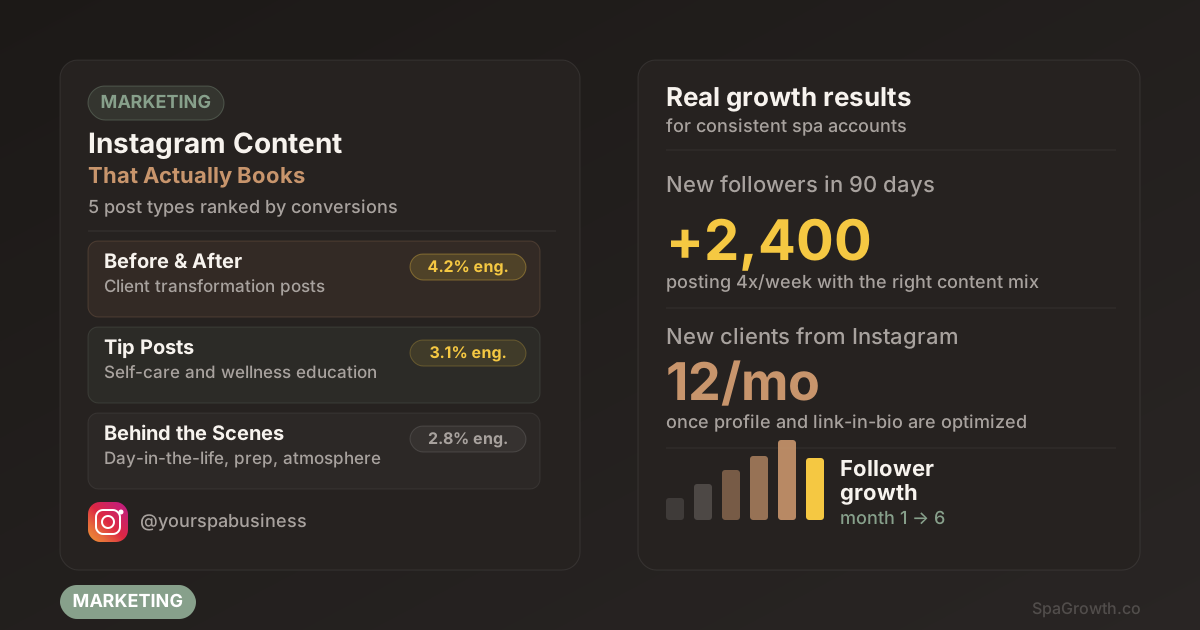
Should Your Spa Be on Instagram at All?
Instagram works very well for massage spas — but only if you're willing to be consistent. If you're going to post 12 times and abandon it, you'd be better off spending that same time on Google reviews or your Google Business Profile, which will generate client bookings from the first week rather than the first year.
Instagram is a long game. The spas that win on it are posting 3–5 times per week, engaging with comments, and treating it as a real marketing channel — not as a box to check. If that's you, Instagram can become a genuine source of new clients, especially for premium spas targeting a 25–45 demographic. If it isn't, double down on Google first.
Instagram vs. Google for new clients: Google Maps and organic search convert at a higher rate because people are searching with intent — they want a massage now. Instagram is discovery-based — they weren't looking, but you appeared. Both matter, but Google wins on efficiency. Instagram wins on brand-building and the ability to reach people before they're even thinking about booking. Ideally, you build both.
Setting Up Your Profile to Convert, Not Just Impress
Most spa Instagram profiles are set up for vanity, not conversions. Here's what actually matters:
Your bio
Your bio has one job: tell a stranger exactly what you do, where you are, and what to do next. Something like:
Massage & wellness spa in [City] · Swedish · Deep Tissue · Hot Stone · Book your session ↓
That's it. No quotes, no emoji overload, no "lover of life." Specificity and a clear next step beat personality every time for a local service business.
Your link in bio
This is where most spa owners waste their biggest conversion opportunity. The link in bio should go directly to your website's booking page — not your homepage, not your Linktree, not your Booksy profile. One click, directly to "pick a service and book."
If you don't have a website with a booking page, that's a gap worth closing before you invest heavily in Instagram. Every follower you earn on Instagram will eventually tap that link. Where they land determines whether they book.
Profile photo and highlights
Your profile photo should be your logo or a clean brand image — not a selfie. Use Instagram Story Highlights to permanently feature your most important content: Services, Pricing, Before & After, Client Reviews, and How to Book.
The 5 Post Types That Actually Convert
Before & After
Show the visual transformation — tight, knotted shoulders vs. relaxed posture. Client pain point resolved. These get saved and shared the most.
Tip & Education Posts
"3 signs you need a deep tissue massage" — educational content gets shared by people who don't follow you yet, expanding your reach beyond your current audience.
Client Testimonials
A screenshot of a 5-star Google review, beautifully formatted over your brand colors, with the client's first name. Social proof in a format Instagram loves.
Behind the Scenes
The prep ritual, the ambiance, the therapist's hands, the product lineup. People want to feel the experience before they book. Give them that preview.
A fifth type worth adding to your rotation: limited-time offers and availability posts. "2 spots open this Thursday evening — DM to book" creates urgency and converts followers who are already warm but haven't taken the step yet. Use these sparingly — once or twice a month — so they don't become background noise.
How Often to Post (Without Burning Out)
The most common reason spa Instagram accounts go quiet is an unsustainable posting schedule. Someone commits to daily posts, burns out after two weeks, and then the account dies.
The sustainable minimum is 3 posts per week: two feed posts and at least one Story or Reel. That's enough to stay visible without consuming your life. Here's a simple repeating framework:
- Monday: Educational tip or myth-busting post ("You don't have to be in pain to benefit from a massage")
- Wednesday: Visual post — before/after, ambiance, product feature, or client testimonial
- Friday: Availability or soft CTA ("Spots still open this weekend — link in bio to book")
- Daily Stories: Quick behind-the-scenes, polls, Q&A, countdown to a promotion
Batch-create content once per week. Take 20 photos in a single session on a slow morning, write your captions for the week, and schedule them using a tool like Later or Meta's built-in scheduler. What feels like a huge time commitment becomes 90 minutes on Sunday evening.
Reels vs. Feed Posts vs. Stories
Instagram's algorithm currently favors Reels more heavily than static posts for reach — Reels are shown to non-followers far more than feed posts. But Reels require more production effort, and a low-quality Reel can hurt your brand more than help it.
Here's the practical approach for a spa with limited time:
- Stories daily: Low-effort, disappear in 24 hours, keeps you top of mind for existing followers
- Feed posts 2–3x/week: Polished, permanent, searchable. These are your portfolio.
- Reels 1x/week if possible: A simple 15–30 second video — ambiance walk-through, quick massage tip, "what a 90-minute session looks like" — can reach thousands of non-followers at zero ad spend
If you can only do one type of video, make it an ambiance tour of your space. These consistently perform well for spas because people are buying the experience — and a 20-second video of candles, soft light, and calm music sells that better than any caption.
Hashtags and Local Targeting
For a local service business, local hashtags outperform generic ones significantly. #massagetherapy has millions of posts — your content is invisible within seconds. #massagespa[yourcity] or #[yourcity]wellness has far less competition and reaches exactly the local audience you want.
Use a mix: 3–5 local hashtags, 3–5 niche service hashtags (#deeptissuemassage, #hotstonemassage), and 2–3 broader wellness tags. That's 8–13 total — more than that looks spammy and doesn't improve performance.
Converting Followers to Paying Clients
This is where most spas stall. They grow a following but the bookings don't follow. The reason is almost always one of three things:
1. The link in bio doesn't go to a booking page
If someone taps your bio link and lands on your homepage with no clear path to booking, most of them leave. Every tap on that link should reach a page where the primary action is "pick a service and book a time." If you don't have a website with that kind of page, you're leaving the conversion potential of every follower you've earned on the table.
2. There's no consistent call to action
Every post should have a purpose. The vast majority of your posts should end with something actionable — "link in bio to book," "DM us to check availability," "save this for your next self-care Sunday." Without it, people enjoy the content and scroll on.
3. The profile doesn't pass the trust test
Imagine a potential client finding your Instagram for the first time. They see your profile, scroll through your last 9 posts, and tap your bio link. In those 30 seconds, do they see: a clear bio with your location and services, consistent high-quality imagery, real client reviews, and a website that looks professional? If any of those are missing, you're losing clients who were interested enough to look.
"Instagram gets people interested. Your website gets them booked. Both have to work for the system to convert."
Instagram Is a Top-of-Funnel Channel — Build the Funnel
The most important thing to understand about Instagram for a massage spa is this: it's a discovery and brand-awareness channel, not a booking platform. People don't typically open Instagram, decide they want a massage, and book one in the same session. They discover you, follow you, warm up to your brand over weeks or months, and then when the moment is right — when they've had a stressful week, when their back hurts, when a friend asks for a recommendation — they remember you and book.
That journey ends on your website. If your website doesn't look as good as your Instagram, or if there's no easy booking path when they arrive, you lose the conversion after doing all the hard work of building the relationship.
The spas that grow fastest treat Instagram as the beginning of a funnel, not the end. Instagram builds the awareness. Your Google Business Profile captures the intent searches. Your website converts both. All three working together is what builds a full calendar.
Build the website that converts your Instagram followers
Your Instagram is doing the work of getting people interested. Make sure your website closes the deal. SpaGrowth builds fast, mobile-first websites for massage spas — with booking integrated, designed to rank on Google, and built to convert visitors into paying clients.
Book a Free Strategy Call →