Is a Massage Spa the Right Business for You?
Before you sign a lease or buy a single massage table, answer this question honestly: are you opening a spa because you love the business side of running one, or because you love massage therapy itself? The answer matters more than most people realize.
Many talented massage therapists open spas and discover they now spend 60% of their time on scheduling, accounting, marketing, and HR — and very little time doing what they love. That's not a reason not to do it, but it is a reason to be clear-eyed about it before you start.
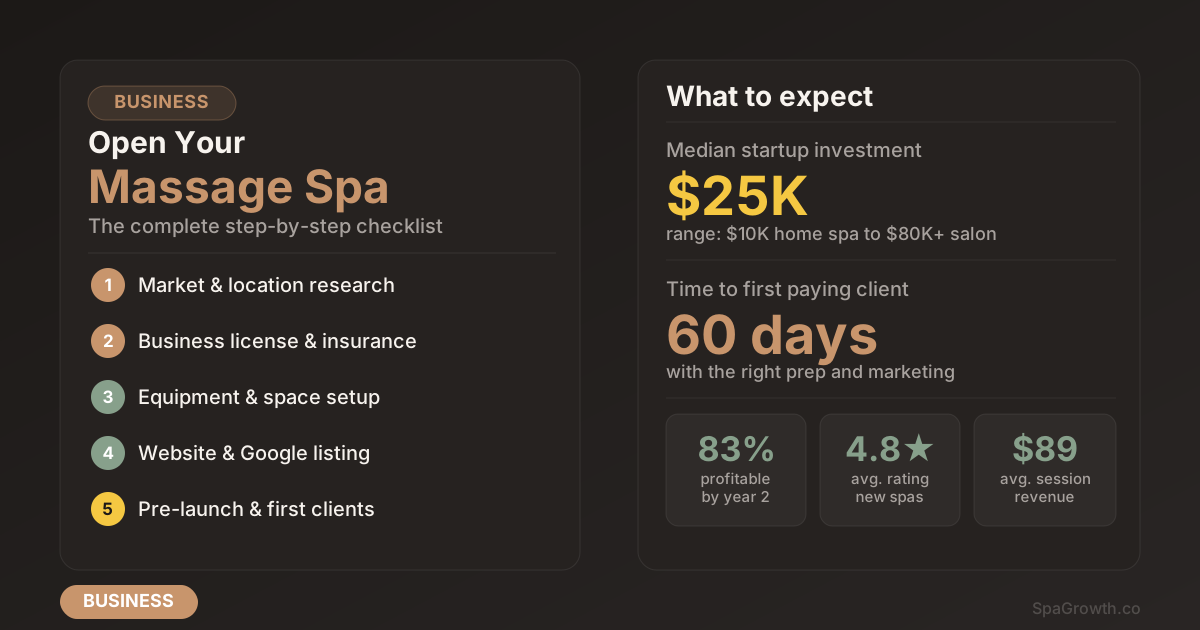
The massage spa industry in the US is healthy. The average standalone massage spa generates between $150,000 and $400,000 in annual revenue, with well-run operations clearing 20–35% net margins after expenses. The startup costs are lower than most service businesses — you can open a small, professional operation for as little as $15,000 to $25,000, or invest $50,000–$80,000+ for a larger, premium build-out.
The honest truth: The spas that struggle most aren't the ones that opened in bad locations or with too little money. They're the ones that opened without a clear marketing plan. A beautiful spa with no online presence fills up slowly — or not at all. Keep that in mind as you read through this checklist.
Step 1: Research Your Market — Before You Fall in Love With a Location
The single most common mistake new spa owners make is finding a space they love and then checking whether the market supports it. Do it the other way around.
How to analyze your local spa market
Open Google Maps and search "massage spa" near the area you're considering. What you find tells you almost everything:
- How many spas are within a 3-mile radius? Three to five direct competitors is healthy. Fifteen means the market is saturated or the location is exceptional.
- What are their review counts and ratings? A top competitor with 400 reviews is entrenched. One with 40 reviews is beatable. Look for the gap between the best-reviewed and the rest — that's your opportunity.
- Are they active on social media? Search each competitor on Instagram. Spas with 200 followers and 14 posts from two years ago are not doing their marketing. Spas with 4,000 followers and weekly posts are. You need to know which kind of market you're entering.
- How do their websites look? Visit the top three competitors' websites on your phone. Do they load fast? Can you book in under 60 seconds? Do they feel trustworthy? Most independent massage spas have terrible websites — which is one of the biggest competitive advantages available to a new owner who gets this right from day one.
Premium spa vs. value spa: make the call early
You need to decide before you open whether you're positioning as a premium spa ($90–$150 per session) or a value spa ($45–$75). This decision shapes everything — your location, your décor, your hiring, your clientele, and your marketing. Trying to be in the middle is the least profitable place to be.
Premium positioning works when: you're in an affluent neighborhood, you can invest in a polished brand and website, and you're willing to compete on experience rather than price. Value positioning works when: you're near a dense residential area, you optimize for volume and repeat bookings, and you're highly efficient with scheduling.
Step 2: Legal Requirements and Licensing
Requirements vary significantly by state, but here's the core checklist that applies almost everywhere:
- Business entity: Form an LLC. It costs $50–$500 depending on your state and separates your personal assets from business liability. Don't skip this.
- Business license: Most cities require a general business license. Check your local municipality — it's usually a simple online application.
- Massage therapy license: Individual therapists must be licensed in your state. If you're hiring, verify every therapist's license before they touch a single client.
- Spa or salon facility license: Some states require a separate license for the facility where massage services are performed. Check your state cosmetology or massage therapy board.
- EIN (Employer Identification Number): Get one from the IRS (free, takes 5 minutes online). You need it to open a business bank account and pay employees.
- Business insurance: At minimum, you need general liability and professional liability (malpractice) coverage. Budget $1,200–$2,500 per year. Some landlords require it before signing.
- Certificate of Occupancy: If you're doing any build-out, you'll need this from your local building department before you can open.
Timeline reality: Licensing and entity formation typically take 2–6 weeks. Don't sign a lease until you've started this process — some licenses can take longer than expected in certain states.
Step 3: Finding and Signing the Right Location
Your location determines your foot traffic and your overhead — both of which directly impact profitability. Here's what actually matters:
What to look for
- Parking: Non-negotiable for a massage spa. Clients arriving for a relaxing 90-minute session will not circle a parking garage. Ground-level or easy adjacent parking is a significant competitive advantage.
- Visibility vs. destination: A massage spa can work as a destination (people seek you out by name) even without major foot traffic — but you need strong online presence to compensate. Visible locations with walk-in potential command higher rents but reduce your marketing burden in the early months.
- Noise and ambiance: Avoid spaces next to a noisy bar, auto shop, or gym. The building itself contributes to the experience before a client opens your door.
- Build-out flexibility: Massage rooms require privacy, sound separation, and often plumbing for showers or wet tables. Negotiate tenant improvement allowances aggressively — landlords in most markets expect to contribute $15–$40 per square foot toward build-out for multi-year leases.
On lease terms
Aim for a 3-year initial term with two 1-year renewal options rather than a 5-year lock-in. This gives you flexibility if the location underperforms. Always negotiate a 2–3 month rent-free period for build-out time. And get an attorney to review the lease — spending $500 on a lawyer could save you $50,000.
Step 4: Equipment and Setup Costs
Here's a realistic budget breakdown for a 3-room massage spa build-out:
- Massage tables: $400–$800 each (commercial grade). Budget $1,500–$2,500 for three rooms.
- Linens and supplies: $800–$1,500 to stock up initially. You'll need 3–4 sets per table.
- Oils, lotions, and products: $500–$1,000 to start. Establish wholesale accounts with suppliers early.
- Reception furniture: $1,500–$3,500 for desk, waiting area seating, and decor.
- Sound system: $300–$800. Ambient music throughout is expected, not optional.
- POS and booking system: Most software is $25–$130/month. Setup cost is minimal.
- Laundry equipment: $800–$1,500 for washer/dryer (or budget for a linen service).
- Build-out and renovation: $10,000–$40,000+ depending on scope. This is the biggest variable.
Total realistic startup range: $15,000 (home-based or already-built-out space) to $80,000+ (fresh build-out, 4+ rooms, premium finishes).
Step 5: Build Your Online Presence Before You Open the Doors
This step is where most new spa owners make their biggest mistake: they focus on the physical space and treat the digital side as an afterthought. Don't. Your online presence is now as important as your location — and in most markets, it's more important.
Your website
You need a professional website before you open. Not a Wix template. Not a Booksy profile page. A real website that looks beautiful on mobile, loads in under 2 seconds, and makes it genuinely easy for someone to book an appointment in under 60 seconds.
Why does this matter from day one? Because when someone in your area searches "massage spa near me" on Google, a professional website with proper SEO is what gets you into those results. A booking platform profile page does not rank on Google. It ranks that platform's domain — and puts your listing right next to your competitors' listings.
Your Google Business Profile
Claim and fully optimize your Google Business Profile (GBP) as soon as you have a confirmed address. This is your single most important free marketing tool. Fill in every field, add 15+ high-quality photos before you open, set your exact hours, and link to your website. The GBP drives a huge proportion of first-time visitors to a new spa.
Your brand
At minimum: a professional logo, a defined color palette, and consistent photography style. These don't need to cost $10,000, but they do need to look intentional. A spa with a polished brand charges more and attracts better clients — it's a direct signal of the experience they can expect.
Need a website and SEO for your new spa?
SpaGrowth builds professional websites for massage spas — fast, mobile-first, and built to rank on Google Maps from day one. Packages start at $247 setup + $149/mo.
See Packages →Step 6: Pre-Launch — Getting Your First 10 Clients
Your first 10 paying clients are disproportionately important. They become your first Google reviewers, your first word-of-mouth advocates, and the people who tell you what's working and what isn't. Here's how to get them before you open:
Friends, family, and soft opens
Two weeks before you open, invite 20–30 people from your personal network for complimentary or heavily discounted sessions. In exchange, ask each person to leave an honest Google review. Launching with 15–20 reviews instead of zero is a significant advantage — both for Google rankings and for the first stranger who discovers you.
Local outreach
Walk into every business within a half-mile radius and introduce yourself. Offices, gyms, yoga studios, hair salons, chiropractors — all of them have clients who get massages. Leave professional cards, offer employee discounts, and ask about referral partnerships. This kind of local relationship-building still works remarkably well and most new spa owners skip it entirely.
Grand opening promotion
A time-limited opening offer (e.g., "First session 30% off — this week only") creates urgency without permanently devaluing your services. Announce it through your Google Business Profile, your social media, and a simple email to anyone who signed up on your website before you opened.
Step 7: Your First 90 Days
The first three months are about learning and adapting, not perfecting. Expect to adjust your pricing, your service menu, your hours, and your marketing as you discover what actually resonates with your specific market.
A few patterns that consistently matter in the first 90 days:
- Chase reviews relentlessly. Ask every satisfied client personally. The gap between a spa with 5 reviews and 50 reviews is enormous for Google rankings and new client trust.
- Track where every client came from. Ask at checkout: "How did you hear about us?" This tells you where to double down. Most new owners are surprised to find that Google is driving more clients than Instagram or word-of-mouth.
- Follow up with every first-time client. A simple text or email 3 days after their session ("Hope you're feeling great — we'd love to see you again") converts first-time visitors into regulars at a dramatically higher rate than waiting for them to rebook on their own.
- Don't discount to fill empty slots. It trains clients to wait for deals. Instead, offer memberships or multi-session packages that reward commitment without reducing your per-session value.
"The spas that grow fastest in year one aren't necessarily the best at massage — they're the best at making it easy for people to find them, book them, and come back."
The Fast Track: What to Prioritize If You're Starting From Scratch
If you're feeling overwhelmed by the checklist, here's the condensed version of what actually moves the needle fastest:
- Form your LLC and get your licenses in motion immediately — these have the longest lead times.
- Lock in your location only after you've done proper market research.
- Build your website and Google Business Profile before you open, not after.
- Do a soft open with friends and family to collect reviews and work out kinks.
- Ask every single happy client for a Google review for your first 6 months.
The spas that stumble don't usually fail because of the massage — they fail because of the marketing and online presence. Get your digital foundation right from the start, and you give yourself a genuine competitive advantage over the majority of spas in your market who are still figuring out how Google works.
Ready to launch with the right digital foundation?
We specialize in building websites and SEO for new massage spas — so your Google presence is working from day one, not month six. Book a free 30-minute strategy call and we'll map out exactly what you need.
Book Free Strategy Call →